
R-110 New Technology Test Program

Roster
Description
The R-110A and R-110B cars were prototype cars delivered to the Transit Authority in 1992. These cars were designed to test out various "New Technology" features that would eventually be incorporated into the next fleet of trains. They were not intended to be production models.
R-110A
Prototype car for the IRT (A) division. Built by Kawasaki, there are 10 cars, numbered 8001-8010, and they are in permanently coupled in 5 car sets.
Train Configuration: The minimum car configuration was designed to be 5 car sets, with full width cabs at each end. The cab cars are powered by four traction motors each. The center car of the five is an unpowered trailer, and the other two cars powered by two traction motors each. The standard IRT loading gauge of 8.5 feet and length of 51 feet have been retained.
Control Stand: The cab is completely computerized, with a control stand consisting of a single lever for traction and braking control, a reversing key, a small numeric and symbol keypad, and a LCD flat panel graphic/alphanumeric display (as in a laptop computer). The display is used in conjunction with the keypad to control doors, reset alarms of various sorts (including the silent passenger alert system), display train speed and braking information, etc.
External: Similar to current R-62 cars now in use on the IRT, except for slightly squarer ends, and the considerably wider passenger entry doors (about one foot wider than the R-62 doors). All car ends are clear glass/lexan now, allowing passengers to see into the next car. The bodies are stainless steel.
Internal: Seating has been improved, giving up the scoop seats in favor of comfortable benches (those who are more than skin and bones will rejoice) in bright colors. Pattern is now parallel across from front/back facing -- rather like the R-62 cars, but with one side shifted from the other, so that the front/back facing seats are opposite benches which are parallel to the side of the car. Unfortunately, some seating space has been sacrificed in order to allow for the wider doors. Interior surfaces are smooth fake-granite fiberglass (or plastic?) -- which is apparently quite resistant to graffiti, and also quite cheap to replace when necessary.
Destination/Route Signs: Signage includes: LED exterior line indicator signs (1,2,3,4,5,6,7), LCD destination signs (in windows), LED interior next stop/variable message signs
Recent Status: The train was yanked from service in the spring of 1998 (made cover of NY Post) due to brake problems. A year later in 1999, it was rumored to be in some sort of fire, which sparked the TA to send it to the repair shop, for full repairs. In mid-June 1999, it returned to the 239th Street Yard. Rumor in September, 2000 was that the train would be repaired and returned to service after receiving parts from Kawasaki, but it never returned to service.
In 2013-2014, 8002–8004 and 8007–8009 were converted into flood pump cars.
R-110B
The R-110B is a prototype car for the IND/BMT division. It was made by Bombardier of Canada and entered service in 1992. There are 9 cars, numbered 3001-3009, and are coupled into three-car sets.
Train Configuration: The car configuration is 3-car sets. Similar to the R-110A, the cab cars are powered with four traction motors each. The center car of the 3-car set is an unpowered, cabless trailer. The cars are of typical B-division loading gauge (10 feet), but are 67' feet long, a length only shared by the BMT Standards.
Control stand: Standard subway train control stand, to which some computerized features have been added. The layout of the controls is desk-style, with a myriad of switches, lamps, and a single lever to control traction and braking. A CRT with function keys on either side has been added, and is used to monitor speed, train status, etc.
External: Similar to R-68 cars now in use on the BMT and IND, the ends are a little squarer, and are lexan (or glass?). Car ends which do not have cabs are open (again lexan or glass).
Internal: Seating is basically the same as in the R-68's, but the materials have been improved -- a matte plastic is used, allowing scratches and stubborn grafitti to be buffed out using a light abrasive. The seats are still slightly scooped, but not as much as before. Internal surfaces are fiberglass and plastic in the wonderful TA tan (ugh!), with some accent provided by a plastic mosaic applique (begging to be peeled off by vandals). The floor is linolium with a pattern of slightly raised and textured squares, which should be quite good when wet. We still have the handhold shortage for shorter passengers. Added, however is a passenger intercom -- which can be used to call for aid in an emergency. Also, the clear non-cab ends of the cars make them feel much more open and airy.
Destination/Route Signs: Roll-sign line indicators (most letters); LCD destination signs; Interior strip route guides with LED indication of stops ahead.
Recent Status: The train spent the early part of its life on the "A" running with all three 3-car sets. Later, due to breakdowns, one of the 3-car sets had been cannibalized for parts and the train then ran on the "C" with two 3-car sets (approximately 70 feet short of a typical 8-car "C" train). Throughout 1999, it had been in and out of service for both repairs and additional component testing. The train has not had the computerized voices and next stop indicator signs programmed for the "C" route, so the conductor does it the old fashioned way. In 2000, it was said that this train may occasionally see weekday service on the "C" Line until it dies. But, its last inspection was in 2000 and the train remains idle in 207th Street yard, no longer on the revenue active list. Since then, one of the three sets has been given up for employee training purposes: cars 3004 and 3006 are at the Coney Island Yard firefighting training facility, and car 3005 went to the NYCT's P.S. 248 training facility. The remaining cars are in storage at 207th St. Yard.
Common Features
- Automatic audible announcements -- the train automatically announces details about the next stop, in a pleasant female voice. The announcements seemed to be robust in the face of unscheduled stops; perhaps they are now triggered by the driver, rather than automatically.
- New sounds when the doors close (probably due to new ADA regulations). There is a "Ding-Dong" and an announcement before the doors close, followed by "BEE-bee-BEE-bee-BEE-bee..." as the doors are closing.
- Computerized traction and braking control -- a single lever controls both acceleration and braking.
- AC Traction Motors controlled using choppers.
- Battery powered operation. Power from the third rail is used to charge batteries, from which power is drawn, converted to AC, and passed to the AC traction motors. This will allow trains to proceed to the next station (or back to the previous station) in case of a loss of third rail power.
- Air bag suspension. Compressors are used to inflate air bladders which are used instead of springs. A computer continuously monitors the train, adjusting the inflation of the bags and keeping the train level.
- Passenger alarm system. A pressure sensitive tape switch is mounted throughout the interior of each car. When pressed, the operator is notified, and a light on the outside of the car comes on, alerting police as to in which car the emergency exists.
- Door motors are now electronically controlled and use worm drive as opposed to the older lever style actuators. It is now impossible to force a door open once it is closed.
- Electronic route/destination signs and synthesized voice station anouncements controlled from the cab.
- Automatic climate control. All heating and air-Conditioning is controlled automatically using a thermostat in each car. The cars switch automatically between heating and cooling as necessary.
- Exterior appearance. Both trains are in the now-standard stainless steel and glass.
Legacy
The R-110A and R-110B trains sat idle for many years but most of the individual cars have been repurposed as work cars or training facilities. See below under Car Notes for a list.
Datasheets
R-110A Datasheet from NYCT Revenue and Non-Revenue Car Drawings
R-110B Datasheet from NYCT Revenue and Non-Revenue Car Drawings
Photo Gallery
| Five Random Images | ||||
 Image 63058 (147k, 1044x788) Photo by: Robert Mencher Location: 207th Street Yard |  Image 102116 (350k, 1044x702) Photo by: Oswaldo C. Location: Concourse Yard |  Image 131739 (317k, 1024x680) Photo by: John Dooley Location: 207th Street Yard | 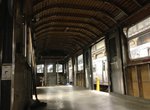 Image 138752 (277k, 1044x788) Photo by: Daniel Negron Location: 207th Street Shop |  Image 138754 (290k, 1044x788) Photo by: Daniel Negron Location: 207th Street Shop |
Car Notes
| Green | Preserved, saved for preservation, or exists in some state |
Yellow | Converted to work service (and later scrapped or still in use) |
Red | Wrecked/Damaged in accident (and possibly repaired), or scrapped prior to the bulk of the type |
| Number | Notes | |||||
|---|---|---|---|---|---|---|
| 3001 | At College Point, Queens NYPD training facility, moved there in 2014. Non-operational. Car was actually cut down to fit in a mock subway station for police training. | |||||
| 3004, 3006 | At Coney Island Yard firefighting training facility. Non-operational.
| |||||
| 3005 | At P.S. 248, Brooklyn (a NYCT training facility). Used as a static, non-operational training car.
| |||||
| 3006 | Sustained fire damage at 181st Street. Damage to contact shoe beam assembly and housing, and to an suspension airbag. Car was repaired and returned to test service. | |||||
| 3007-3009 | This three-car set was cannibalized for parts to maintain the other two sets. It was taken out of service on 11/4/1996. | |||||
| 3007 | 3007 moved into residency at the New York Transit Museum in February, 2025.
| |||||
| 8002–8004, 8007–8009 | In 2013, being converted to work service as flood pump/reach cars (used to venture into flooded areas and pump them out).
|


| ||||||||||||||||||||||